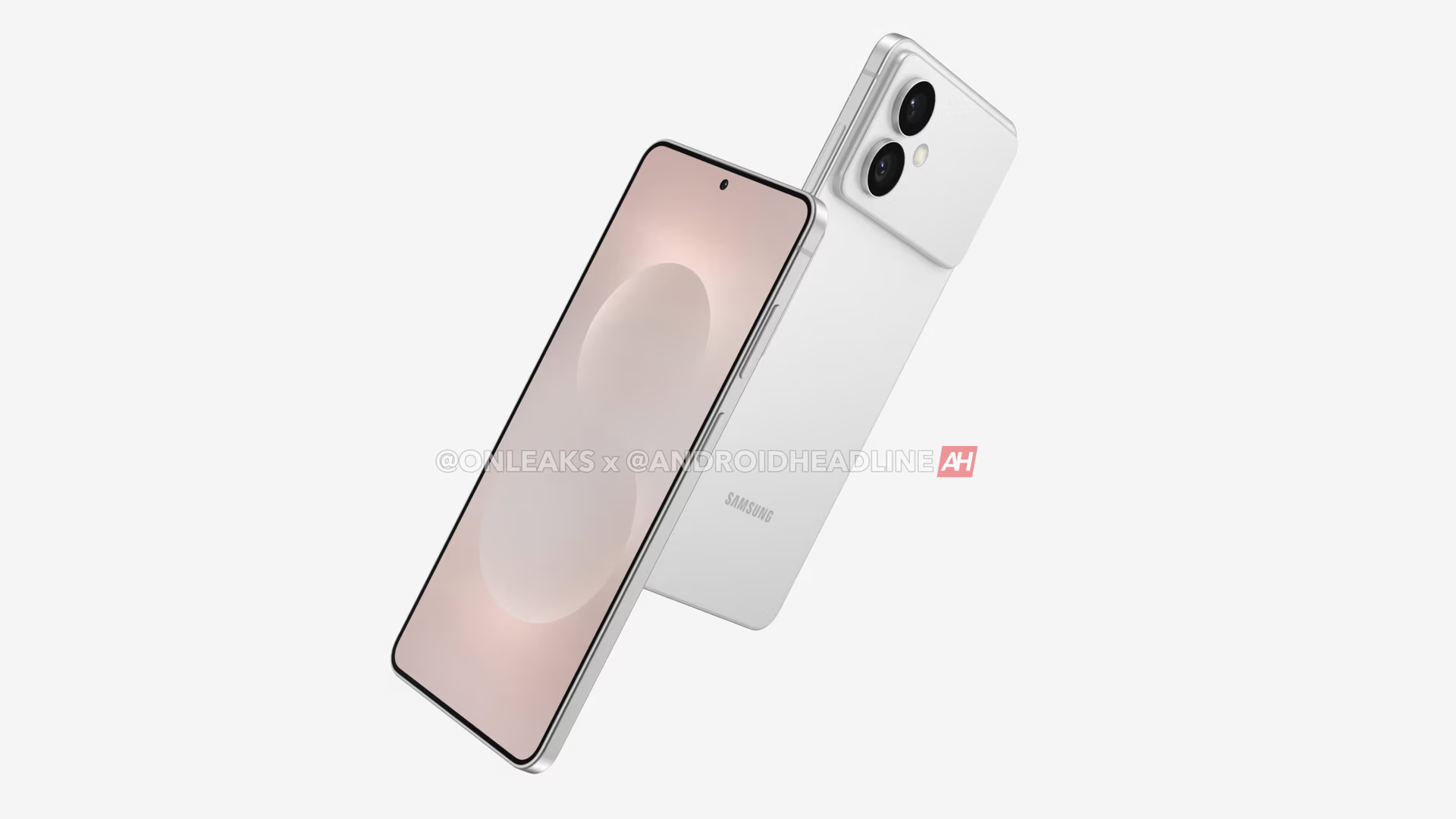
The Fading Curve: What Samsung Cancelling the Galaxy S26 Edge Means for the Future of Flagships
In the ever-churning world of mobile tech, a subtle tremor often signals a larger shift. Reports are surfacing that Samsung, a titan in the smartphone arena, plans to axe the Galaxy S26 Edge from its future lineup. While seemingly just another product discontinuation, this move carries significant weight, potentially signaling a strategic recalibration for the company and the broader premium smartphone market.
For over a decade, Samsung has been at the forefront of smartphone innovation, consistently pushing boundaries in design, display technology, and overall user experience. The potential cancellation of a prominent ‘Edge’ variant is not merely an aesthetic choice; it’s a profound strategic decision that speaks volumes about evolving consumer demands, competitive landscapes, and Samsung’s long-term vision for its flagship portfolio. This shift could redefine what we expect from a premium smartphone and how leading manufacturers allocate their innovation budgets.

This report, which initially surfaced from reputable industry analysts and tech publications like Android Authority, suggests that the Galaxy S26 Edge, a model that would typically represent a middle ground between a standard S-series device and the top-tier Ultra, might not see the light of day. Such a decision would mark a pivotal moment, moving away from a design philosophy that, for years, defined Samsung’s high-end appeal. Let’s delve into the genesis of the Edge design and explore why its potential demise is far more than just a footnote in smartphone history.
The Rise and (Potential) Fall of the Edge
Remember the early days of the curved screen? The Galaxy S6 Edge was a revelation, a bold departure from the flat slab that dominated the market, turning heads and setting a trend that many competitors attempted to emulate. It wasn’t just a gimmick; it was Samsung’s signature, a visual identifier that screamed ‘premium’ and ‘innovation.’ Its dual-curved display offered a distinctive aesthetic, making the phone feel thinner in hand and creating an optical illusion of a bezel-less experience even before true edge-to-edge displays became common.
For years, the ‘Edge’ variant, whether explicitly named or subtly integrated into ‘Plus’ and ‘Ultra’ models, defined the aesthetic of high-end Android smartphones. It offered a unique grip, a visually immersive display that seemed to pour over the sides, and a distinctive identity that separated Samsung’s offerings from the competition. Features like Edge Panels for quick access to apps and contacts, though sometimes criticized for utility, further cemented the idea that the curved screen offered something beyond mere looks, pushing the boundaries of what a smartphone could look like.
However, as with all innovations, the ‘Edge’ design eventually matured, becoming less of a novelty and more of an expectation. What was once groundbreaking became commonplace. Many flagships, including Samsung’s own, incorporated subtle curves, blurring the lines that once made the ‘Edge’ so unique. The initial ‘wow’ factor began to diminish as consumers grew accustomed to the design, and some of the practical drawbacks started to overshadow the aesthetic appeal. The market evolved, and with it, the perception of what constitutes true innovation, pushing manufacturers to seek the next big differentiator.
Deconstructing the “Why”: A Strategic Recalibration
So, why would Samsung reportedly ditch a design that once epitomized its pioneering spirit and secured its position as a design leader? The reasons are likely multifaceted, a culmination of market trends, invaluable consumer feedback, and an internal strategic re-evaluation. This isn’t a hasty decision but rather a calculated move to optimize resources and sharpen its market focus, ensuring its continued leadership in a dynamic industry.
Redundancy in the Lineup
As the years progressed, the ‘Edge’ experience became less unique. The distinction between a “flat” S model and an “Edge” model diminished significantly as even the standard S-series phones adopted slightly curved glass at the edges. More crucially, Samsung’s own ‘Ultra‘ series effectively absorbed the premium slot, consistently featuring the most advanced cameras, larger batteries, the latest processors, and often, those very same gentle screen curves that once defined the Edge. The ‘Edge’ model likely found itself in an awkward middle ground, struggling to justify its distinct existence between a standard flagship and an all-out ‘Ultra’. Why maintain a marginally differentiated model when the ‘Ultra’ already reigns supreme, offering a comprehensive package that appeals to the most demanding users? This redundancy not only confused consumers but also diluted Samsung’s marketing message for its S-series lineup, making product differentiation a challenge.
Shifting Consumer Preferences
While undeniably beautiful and visually striking, curved screens aren’t universally loved. A significant segment of the market has always preferred the practical robustness and easier usability of a flat display. Curved edges can be perceived as more fragile, making the phone more susceptible to damage from drops, particularly along the vulnerable corners. They are also notoriously prone to accidental touches, especially during one-handed use, leading to frustrating unintended inputs that disrupt the user experience. Furthermore, applying screen protectors to curved displays is often a fiddly, frustrating experience, rarely resulting in a perfect, bubble-free fit, which deters many users. This move might reflect a greater responsiveness to these pervasive user preferences, prioritizing functionality and durability over a purely aesthetic differentiator that comes with practical compromises. Flat screens offer a more consistent viewing experience without distorted edges, and they are generally perceived as more durable and easier to protect, aligning with a growing demand for longevity in smartphones.
Strategic Consolidation
Streamlining a product lineup isn’t just about cutting costs; it’s about clarity, efficiency, and impact. A simpler portfolio allows Samsung to focus its marketing and research and development (R&D) efforts more intensely on fewer, more impactful devices. Instead of spreading resources across three slightly different S-series variants (e.g., standard, Edge/Plus, Ultra), they can now channel that energy into perfecting two distinct offerings, maximizing their potential. It also makes the buying decision easier for consumers, reducing choice paralysis and allowing Samsung to present a clearer value proposition for each model. This consolidation can lead to better optimized software, more robust hardware, and a more coherent brand message in a highly competitive market, ultimately strengthening Samsung’s position against rivals.
The Foldable Future
Perhaps the most compelling ‘why’ points directly to Samsung’s other innovation frontier: foldables. With the Galaxy Z Fold and Z Flip series, Samsung has established a new, truly distinct premium category that offers novel form factors and experiences unlike anything else on the market. Investing resources and marketing muscle here, rather than maintaining a marginally differentiated ‘Edge’ variant, makes profound strategic sense. Foldables are now the ‘new Edge’ – they are the bold, innovative, head-turning designs that truly push boundaries and capture public imagination, much like the original S6 Edge did a decade ago. By dedicating more resources to its foldable division, Samsung can accelerate development, lower production costs, and bring these cutting-edge devices to a wider audience, solidifying its lead in this transformative segment of the smartphone market and cementing its reputation as a true innovator.
What This Means for the Future of Samsung Flagships
The reported cancellation of the S26 Edge isn’t just a product cut; it’s a window into the evolving landscape of high-end smartphones and Samsung’s overarching strategic vision. This move could herald a new era of clarity and focused innovation for the Korean tech giant, impacting both its traditional S-series and its burgeoning foldable lines, ultimately reshaping consumer expectations.
A Clearer Flagship Hierarchy
Expect Samsung’s S-series to potentially consolidate into a more defined and logical structure – perhaps a standard model that offers excellent value and performance for the mainstream user, and a singular, powerhouse ‘Ultra‘ that truly represents the pinnacle of their traditional smartphone technology. This simplifies consumer choice, making it easier for buyers to understand the differences and choose the model best suited to their needs and budget. With fewer models to differentiate, Samsung can focus its messaging, ensuring that each device has a clear identity and a compelling reason to exist. This streamlined approach can lead to more impactful product launches and a stronger brand presence for each variant, enhancing overall market penetration and loyalty.
Re-focus on Core Strengths
With less internal competition and a more streamlined S-series lineup, Samsung can pour significantly more resources into refining the ‘Ultra‘ experience. This means pushing boundaries in camera technology (e.g., advanced computational photography, enhanced zoom capabilities, larger sensors), processing power (optimizing their Exynos chips or working more closely with Qualcomm to deliver cutting-edge performance), battery life (achieving all-day power with demanding usage), and display quality (brighter, more vibrant, more efficient panels with higher refresh rates). The goal will be to ensure the ‘Ultra’ remains the undisputed traditional smartphone king, offering an unparalleled blend of features and performance that justifies its premium price tag. This focused innovation can lead to breakthroughs that benefit the entire smartphone ecosystem, driving competition and raising the bar for all manufacturers.
Foldables as the Innovation Beacon
This move further solidifies foldables as Samsung’s primary vehicle for pushing truly novel smartphone form factors and experiences. The ‘Edge’ was once the future of smartphone design; now, that torch unequivocally belongs to the ‘Fold’ and ‘Flip’ devices. We could see accelerated development in foldable display technology, hinge mechanisms (improving durability and reducing creases), software optimization for unique multi-window and multitasking experiences, and potentially more aggressive pricing strategies for their foldable range to make them more accessible to a mainstream audience. Samsung’s commitment to foldables is a long-term play, and by dedicating more resources and marketing attention to them, they aim to make foldables not just a niche luxury but a viable, compelling alternative to traditional slab phones, driving mass adoption.
Practicality Over Pizazz?
It might also signal a slight lean towards practicality and robust, tangible features over purely aesthetic differentiators that offer marginal functional benefit. While design will always be crucial in the premium segment, this shift suggests that Samsung is prioritizing user experience, durability, and practical innovation that directly addresses consumer pain points. This isn’t a retreat from design innovation but a re-evaluation of its purpose. It suggests a future where innovative design serves a clear functional purpose rather than being an end in itself. Consumers are increasingly valuing longer-lasting devices, better battery life, more versatile cameras, and a more robust build, and this strategic pivot aligns Samsung’s focus with those evolving priorities, aiming for devices that are as functional as they are beautiful.
Conclusion: A Mature Market and Focused Innovation
The sunsetting of the Galaxy S26 Edge, if it comes to pass, marks more than just the end of a product line. It signifies a mature market where subtle design variations are giving way to either more impactful technological advancements within traditional form factors or truly transformative new ones. Samsung isn’t abandoning innovation; it’s refining where and how it applies it, perhaps ushering in an era of more focused, potent flagship offerings alongside its groundbreaking foldables. The curve may be fading, but the path forward for Samsung appears sharper, more strategic, and ultimately, more compelling than ever. This strategic recalibration positions Samsung to navigate the next decade of smartphone evolution with renewed clarity and purpose, ensuring its continued leadership in a dynamic and ever-changing industry, by anticipating and shaping the future of mobile technology.
What are your thoughts on Samsung potentially ditching the ‘Edge’ design? Do you prefer flat or curved screens, and what do you believe is the next big innovation in smartphone design that will truly capture the market’s attention?
Read the original story at Android Authority.