A New Era of Gaming Crossovers: More Than Just Marketing
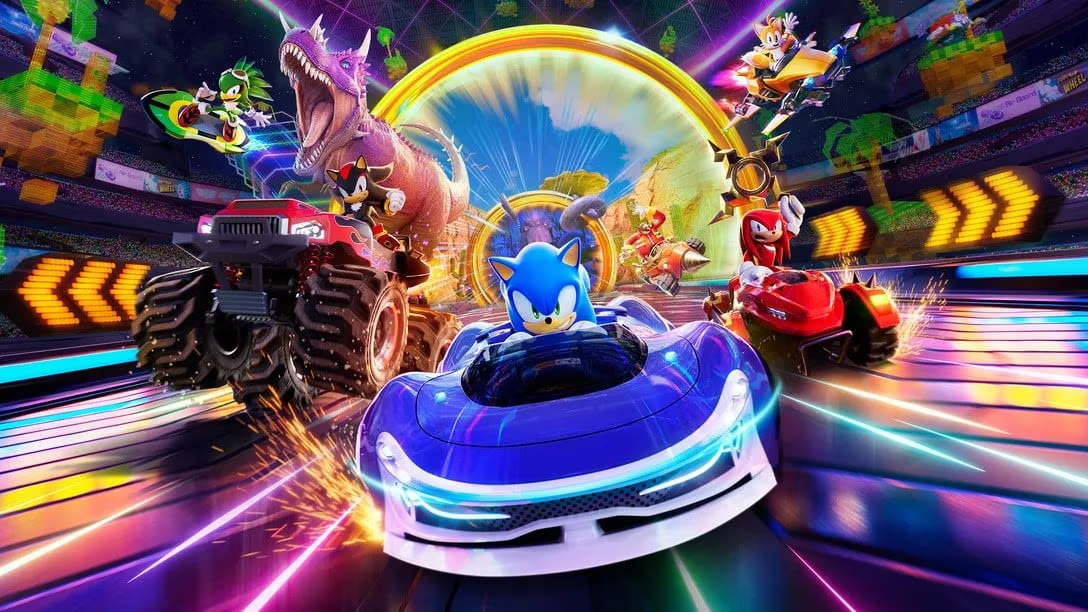
In the vibrant, ever-evolving landscape of video games, the concept of the crossover has transcended mere novelty to become a cornerstone of modern gaming culture. From iconic characters like Kratos battling it out in Fortnite to unexpected genre mash-ups such as Link navigating a *Souls*-like realm, players have come to anticipate and celebrate these improbable unions. Yet, amidst the flurry of these digital alliances—many of which feel like calculated marketing maneuvers—a rare gem occasionally emerges. These are collaborations that resonate not just as commercial ventures, but as heartfelt tributes, carefully crafted love letters to the rich tapestry of gaming history. If the latest whispers and highly credible leaks are to be believed, Sega’s upcoming ambitious title, Sonic Racing: CrossWorlds, is poised to deliver precisely this kind of unforgettable experience, redefining what we expect from a crossover event.
Just when the gaming community thought the star-studded roster for Sega’s groundbreaking crossover racer was beginning to solidify, a seismic leak has sent ripples of excitement and disbelief across online forums and social media. Following on the heels of already surprising and enthusiastically received additions—such as the vibrant, graffiti-tagging characters from Jet Set Radio and the stylish, world-saving heroes of Persona 5—it now appears the next formidable challenger approaching the starting line hails from a franchise many gamers, particularly those of a certain vintage, had sadly relegated to the annals of history: Nintendo’s own legendary, lightning-fast, and notoriously high-stakes futuristic racer, F-Zero.

That’s right. The unmistakable silhouette of the Blue Falcon, complete with its signature roaring engine and, almost certainly, its enigmatic and beloved pilot Captain Falcon, appear to be the next highly anticipated DLC addition for Sonic Racing: CrossWorlds. This isn’t merely another character drop; it’s a monumental moment that bridges two titans of arcade racing and signals a bold new direction for the genre.
The Blue Falcon Takes Flight: F-Zero’s Triumphant Return to the Track
The initial rush of adrenaline from seeing two of gaming’s most iconic speedsters—the impossibly quick Sonic the Hedgehog and the incomparably cool Captain Falcon—poised to share the same impossibly twisting, gravity-defying tracks is, without a doubt, a thrill in itself. This is the stuff of childhood dreams and fervent fan fiction brought to vivid life. Imagine the high-speed chases, the frantic boosts, and the sheer spectacle of these two racing legends vying for first place. However, the true significance of this revelation stretches far beyond mere fan service or the novelty of a new racer. This is a strategic masterstroke, a move so profound it has the potential to fundamentally redefine what a crossover game can achieve and, indeed, what it means to honor gaming’s past.
For nearly two decades, the F-Zero franchise has been relegated to a state of painful dormancy. Its vibrant, high-octane world, blistering speeds, and unique energy management mechanics have only flickered back into existence through the occasional, much-celebrated appearances of Captain Falcon in Nintendo’s massively popular Super Smash Bros. series. Beyond these fighting game cameos, the only signs of life for F-Zero have been the desperate, fervent pleas of its dedicated and enduring fanbase, yearning for a new installment. The economic realities of the modern gaming industry make a full-budget, standalone *F-Zero* game a considerable financial risk for Nintendo. The development costs are immense, and the potential return on investment for a niche, though beloved, franchise with a long hiatus is often seen as uncertain. But placing Captain Falcon, complete with his signature vehicle and racing prowess, into a high-profile, multi-platform game like Sonic Racing: CrossWorlds? That’s not just clever; it’s truly genius.
A Strategic Masterstroke: Resurrecting Dormant IPs with Low Risk
The F-Zero Conundrum: Why Now After Two Decades?
The long silence surrounding F-Zero has been a source of much frustration for its loyal followers. Debates have raged for years about why Nintendo, a company celebrated for its innovative gameplay and iconic characters, would let such a critically acclaimed and unique franchise lie fallow. Theories ranged from difficulty in innovating beyond its already perfect formula, to a perceived lack of mass market appeal compared to the evergreen *Mario Kart*. Whatever the reasons, the absence of a new *F-Zero* title has left a palpable void in the racing genre, leaving fans hungry for any crumb of content. The inclusion of Captain Falcon in Sonic Racing: CrossWorlds isn’t just a crumb; it’s a full-course meal served with a side of hope.
Low-Risk, High-Reward: The CrossWorlds Approach to IP Revival
This approach represents a remarkably low-risk, high-reward strategy for Nintendo. By integrating one of their most requested dormant IPs into an existing, well-funded, and widely anticipated title like CrossWorlds, they achieve several crucial objectives simultaneously. Firstly, it keeps the F-Zero IP alive and relevant in the contemporary gaming conversation, reintroducing it to a new generation of players who might only know Captain Falcon from *Smash Bros.* or not at all. Secondly, it provides a unique opportunity to gauge modern interest and demand for the franchise without committing to the astronomical development costs of a full standalone game. The performance of Captain Falcon’s DLC, the engagement levels, and the buzz it generates can provide invaluable data for Nintendo’s future IP strategies. Thirdly, and perhaps most importantly for the long-time fans, it offers a tangible taste of what they’ve been missing, a genuine racing experience that evokes the spirit of *F-Zero* within a fresh, dynamic environment. This move enriches the entire Sonic Racing experience while potentially paving the way for a more substantial *F-Zero* revival down the line.
Beyond a Kart Racer: CrossWorlds as a Digital Museum on Wheels
A Living Platform for Gaming History and Preservation
This revelation isn’t just about a new character; it fundamentally reveals the true, brilliant strategy behind Sonic Racing: CrossWorlds. The name itself, “CrossWorlds,” was perhaps the biggest and most telling clue all along. This game was never conceived to be just another iteration of Sonic & All-Stars Racing, a mere expansion of Sega’s own vast back catalog. Instead, it was meticulously built from the ground up to be a living, breathing platform, an ever-expanding celebration of gaming culture in its broadest sense. It’s becoming a meticulously curated digital museum on wheels, a preservation project for gaming’s most beloved—and, tragically, sometimes most neglected—universes. Each new character added to the roster isn’t just a new driver with unique stats and abilities; it’s a rescued artifact, lovingly restored, polished, and put on dynamic display for both nostalgic veterans and curious new generations to appreciate and experience.
Sega’s Answer to Smash Bros., Redefined for the Racetrack
In many ways, CrossWorlds is emerging as Sega’s profound answer to Nintendo’s monumental *Super Smash Bros.* series. While *Smash Bros.* focuses on bringing together iconic fighters from across various gaming universes for epic fisticuffs, CrossWorlds carves its own unique niche by focusing on entire *worlds* and the enduring *legacies* they represent, all within the adrenaline-fueled context of racing. The game’s expansive scope allows for more than just character cameos; it can potentially incorporate track elements, music, and thematic cues from these guest franchises, deepening the immersion and respect paid to each source material. The earlier additions of *Jet Set Radio* and *Persona 5* characters already set a strong precedent for this, demonstrating Sega’s willingness to look beyond its most obvious franchises and embrace beloved, albeit sometimes niche, cultural touchstones. These additions were not just about adding drivers, but about celebrating the unique art styles, infectious soundtracks, and distinctive vibes of those respective games, enriching the overall tapestry of CrossWorlds.
The Future is Limitless: What Dormant IPs Could Be Next?
A Universe of Possibilities for Collaboration and Revival
The implications of the *F-Zero* collaboration for the future of Sonic Racing: CrossWorlds are truly staggering and infinitely exciting. If the gates are now open for a historically guarded, dormant Nintendo IP like *F-Zero*, the boundaries of possibility have effectively been shattered. Who else might be next to join the grid? The imagination runs wild with potential candidates. Could we see a sleek, futuristic machine from Namco’s iconic, drift-heavy *Ridge Racer* series? Perhaps a yellow cab from Sega’s own frantic arcade classic, *Crazy Taxi*? What about the high-flying vehicles from Sony’s futuristic combat racer, *Wipeout*, or even a podracer from the Star Wars Episode I: Racer game? Beyond racing-specific titles, the potential expands to include characters and vehicles from beloved action franchises like Sega’s *Golden Axe* or *Skies of Arcadia*, or even more obscure, yet cherished, gems like Vectorman. The game is no longer just a celebration of Sega’s legacy; it’s transforming into a dynamic testament to the shared, sprawling history of the entire video game industry.
Navigating the Licensing Labyrinth: Sega’s Unique Position
Of course, the road to such ambitious crossovers is fraught with legal complexities and licensing hurdles. However, Sega appears uniquely positioned to navigate this labyrinth. Their long history as both a console manufacturer and a third-party publisher has fostered deep relationships across the industry. Their willingness to embrace other companies’ IPs, even from former rivals, signals a new era of open collaboration. This forward-thinking approach could establish Sonic Racing: CrossWorlds not merely as a successful racing game, but as the definitive, ultimate crossover platform for gaming history. Each new announcement would become an event, a collective moment of nostalgia and discovery that keeps the game perpetually fresh and relevant for years, even decades, to come.
“Games as a Celebration”: The Evolution of a Modern Model
Reframing “Games as a Service” into a Positive Experience
What we are witnessing with Sonic Racing: CrossWorlds is a profound evolution of the “games as a service” (GaaS) model. Historically, GaaS has often been met with skepticism, sometimes rightly so, due to its association with predatory monetization, endless grinding, and incomplete launch titles. However, CrossWorlds is expertly recontextualizing this model, transforming it from a potential burden into an ongoing delight. It’s shifting the paradigm from “games as a service” to “games as a celebration”—a continuous, evolving festival of gaming culture. Instead of feeling like a never-ending drip-feed of content designed to extract maximum revenue, each new character and world feels like a cherished gift, a carefully chosen artifact added to a growing collection, eagerly anticipated by a passionate community.
Fostering Community, Nostalgia, and a Shared Heritage
The long-term appeal and enduring legacy of Sonic Racing: CrossWorlds won’t solely rest on its undeniably solid racing mechanics or its polished presentation. Its true magnetic draw will be the constant, thrilling anticipation of which forgotten corner of gaming history it will honor next. This innovative approach fosters an incredible sense of community, as players speculate, discuss, and celebrate each new addition together. It taps into the powerful wellspring of nostalgia for older gamers, while simultaneously educating and engaging younger players with the rich heritage of the medium. It’s a brilliant, forward-thinking move that not only ensures the game’s commercial success and longevity but also solidifies its place as a groundbreaking title that we will undoubtedly be talking about, and playing, for many years to come.
Get Ready to Show Them Your Moves: The Racetrack Awaits its Next Legend
So, rev your engines, prepare for the unexpected, and get ready to show them your moves. The racetrack in Sonic Racing: CrossWorlds is rapidly transforming into hallowed ground, a vibrant arena where the past, present, and future of gaming collide in exhilarating, high-speed glory. The legacy of gaming is being rewritten, one legendary racer at a time.
Read the original story at Nintendo Life.
What dormant gaming franchise are YOU most hoping to see revived and racing in Sonic Racing: CrossWorlds next? Share your dream crossovers, no matter how wild, in the comments below!