From the Sidelines, Trump Reminds Europe: ‘I Told You So’ on Russian Energy
In a move that vividly blends past grievances with a pressing present-day crisis, former President Donald Trump has once again stepped into the global spotlight, reigniting a familiar and highly consequential debate. With characteristic bluntness, he issued a stark warning to European allies: the time to definitively sever their deeply entrenched energy dependence on Russia is no longer a strategic consideration for the future, but an immediate imperative. This forceful message serves as a powerful and, for many European leaders, an undoubtedly uncomfortable echo of persistent warnings he issued throughout his presidency, effectively transforming what was once dismissed as a transactional talking point into a critical question of wartime strategy and moral responsibility.
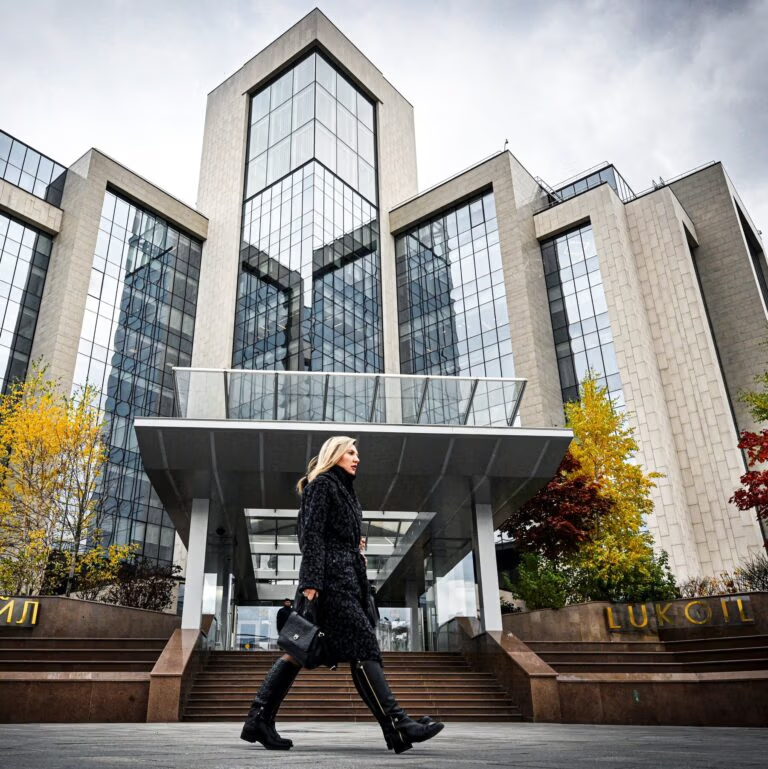
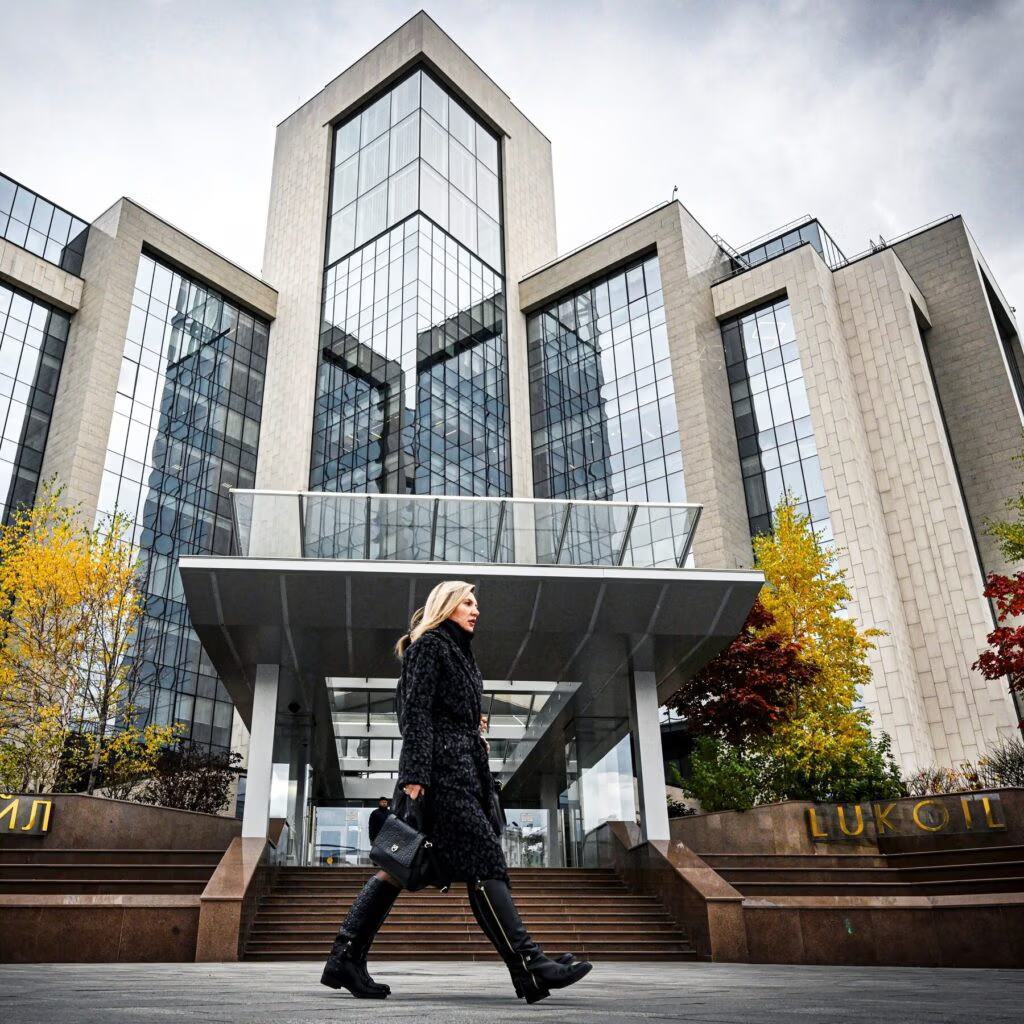
Trump’s core argument, delivered with unwavering clarity, is both simple and profoundly sharp: by continuing to funnel hundreds of billions of dollars annually into Russian coffers through the purchase of oil and natural gas, European nations are doing far more than simply keeping their lights on or their industries running. They are, he asserted, actively and directly underwriting the very war machine that Moscow is deploying with devastating effect in Ukraine. “They’re paying for the war,” he declared, deliberately cutting through the layers of diplomatic nuance, complex contractual obligations, and economic realities that often obscure the stark truth of global energy markets and their geopolitical ramifications.

This isn’t a new script for Donald Trump, nor is it a sudden pivot in his foreign policy rhetoric. For years, he famously and publicly chastised European leaders, most notably then-German Chancellor Angela Merkel, over the controversial Nord Stream 2 pipeline. He consistently framed Germany’s growing reliance on Russian gas not merely as an economic partnership or a cost-effective energy solution, but as a perilous strategic vulnerability. In his view, this reliance left the entire continent dangerously beholden to the Kremlin’s unpredictable geopolitical whims and its energy leverage. At the time, his pointed warnings were often met with skepticism, frequently dismissed by critics as nothing more than transactional bluster, a thinly veiled attempt to push American liquefied natural gas (LNG) onto a potentially captive European market. Today, however, with the horrific reality of Russian tanks on Ukrainian soil, bombing cities and displacing millions, those same warnings are being viewed through a chillingly different, and increasingly validating, lens.
The geopolitical landscape has shifted dramatically, casting Trump’s previous admonishments in a stark new light. Critics who once decried his approach as isolationist or protectionist are now forced to confront the undeniable fact that a significant portion of Europe’s economic stability was built upon a foundational energy dependency that has now become a direct liability in a major European conflict. The sheer volume of energy imports from Russia, particularly gas, had created an intricate web of interdependencies that, while beneficial during times of peace, have proven catastrophically fragile during wartime. This historical context underscores the deep roots of the current crisis, highlighting a strategic miscalculation that has profound implications for global security and economic stability.
What This Means for the Future of Transatlantic Relations and American Politics
Europe’s Strategic Dilemma and the Energy Trap
The real takeaway from Trump’s latest intervention isn’t just the message itself, resonant as it is, but what it profoundly signals for the future trajectories of transatlantic relations and the intricate dynamics of domestic American politics. Firstly, and perhaps most immediately impactful, his commentary crystallizes the agonizing and painful dilemma currently facing Europe. Leaders in vital capitals like Berlin, Paris, and Brussels find themselves ensnared in a strategic trap of immense proportions. On one hand, they keenly understand the undeniable moral and geopolitical imperative to swiftly and decisively cut off the lucrative flow of cash to Moscow, acknowledging that every euro or pound spent on Russian energy fuels the aggression in Ukraine. On the other hand, the economic fallout of such a drastic and immediate move—including soaring energy prices that would cripple households and businesses, widespread industrial shutdowns leading to mass unemployment, and the inevitable surge of public unrest—represents a political nightmare of epic proportions, threatening social cohesion and governmental stability across the continent.
Trump’s blunt commentary, whether perceived as genuinely helpful or merely grating and opportunistic, undeniably amplifies this external pressure. It throws into sharp relief what many now recognize as a profound strategic failure, not of months, but of decades in the making. For too long, the convenient and often cheaper flow of Russian oil and gas was prioritized over the long-term strategic imperative of diversifying energy sources and bolstering genuine energy security. This short-sightedness has left Europe in an unenviable position, where its economic well-being is intrinsically tied to the very nation it seeks to sanction and condemn. The dilemma is stark: continue funding the war or risk plunging one’s own citizens into severe economic hardship and potential recession. The current scramble for alternative energy supplies, from liquefied natural gas (LNG) shipments from the US and Qatar to renewed efforts in renewable energy, highlights the urgency and the difficulty of extricating itself from this deeply woven dependency.
The economic repercussions are already beginning to be felt, with energy prices contributing significantly to rampant inflation across the Eurozone. Industries heavily reliant on natural gas, such as chemicals, fertilizers, steel, and ceramics, face existential threats as input costs skyrocket. Governments are forced to implement massive subsidy packages to protect consumers and businesses, further straining public finances. This “energy trap” isn’t just about financial cost; it’s about the very fabric of European society and its capacity to sustain its industrial base and social welfare models. Trump’s “I told you so” resonates precisely because these warnings about over-reliance on Russian energy were consistently dismissed as hyperbole, only to manifest now as a chilling reality.
A Potent 2024 Campaign Narrative for Trump
Secondly, this intervention is a remarkably clear preview of a potent and likely central narrative for Donald Trump’s potential 2024 presidential campaign. He is shrewdly positioning himself not merely as a critic of the current Biden administration’s foreign policy or its handling of the crisis, but as a genuinely prescient voice. He aims to portray himself as someone who clearly foresaw this precise crisis – a devastating conflict exacerbated by Europe’s energy dependency – and offered clear, actionable advice that his successors and European allies ostensibly ignored. This narrative allows him to craft a compelling and deeply resonant “I told you so” argument that will undoubtedly galvanize his base and appeal to a broader segment of the electorate weary of international entanglements and perceived foreign policy failures.
For Trump, the Ukraine conflict becomes a stark illustration of a disaster that, in his telling, could have been significantly mitigated, if not entirely avoided, had his consistent counsel on prioritizing energy independence been heeded. This stance aligns perfectly with his “America First” philosophy, which often views international alliances through a transactional lens and emphasizes national sovereignty and self-reliance over complex multilateral agreements. It provides him with a powerful platform to criticize current globalist policies, arguing that they lead to vulnerabilities that ultimately cost American taxpayers and endanger global stability. His message will be that a stronger, more energy-independent America, operating with allies who are similarly self-reliant, is the best path to peace and prosperity, contrasting sharply with what he would characterize as the perceived weaknesses and missteps of current international diplomacy.
This narrative also allows him to draw a clear distinction between his past administration’s approach to Russia, which he often characterizes as having been tough despite widespread criticism, and the current situation. He can argue that his policies, including sanctions and pressure regarding Nord Stream 2, were designed to prevent exactly what is now unfolding. The resonance of this argument with his base is undeniable, as it plays into existing skepticism about international institutions, foreign aid, and the perceived drain of global commitments on American resources. It sets the stage for a campaign that will likely scrutinize not only the immediate responses to the Ukraine war but also the broader strategic frameworks that preceded it, framing them as failures of foresight and national interest.
The Uncomfortable Re-evaluation of Globalism and National Security
Finally, and perhaps most enduringly, Trump’s words force a broader, far more uncomfortable conversation about the true costs and inherent fragilities of what has long been considered mainstream globalism. The brutal crisis unfolding in Ukraine has irrevocably blurred the previously distinct lines between economic policy and national security. What was once seen as purely a matter of trade balance sheets or energy contracts is now unequivocally a matter of geopolitical leverage, military financing, and the fundamental defense of sovereign nations. The long-held, foundational belief that economic interdependence, fostered through intricate supply chains and mutual energy reliance, would inherently prevent major conflicts between significant powers has been shattered with devastating force.
This paradigm shift profoundly challenges decades of post-Cold War foreign policy thinking, which posited that integrating nations economically would create too many shared stakes to allow for large-scale military aggression. The very notion that “the more we trade, the less we fight” has been violently disproven by Russia’s actions. Trump’s long-standing skepticism of these entanglements, which was once widely derided as isolationist, unsophisticated, or even dangerous by the foreign policy establishment, now finds a new, unexpectedly urgent, and increasingly receptive audience. His arguments, previously framed as insular nationalism, are now being re-evaluated by some as a pragmatic form of national realism, prioritizing strategic independence and resilience over the perceived benefits of globalized interconnectedness.
This forces a profound global re-evaluation of who can truly be trusted as a strategic economic partner. It prompts nations to look beyond immediate economic benefits and consider the long-term security implications of their supply chains, their energy sources, and their technological dependencies. The lessons from Russia’s weaponization of energy are likely to ripple through discussions concerning other major global economic players, particularly China, and its complex economic ties with the West. The crisis highlights the need for diversification, resilience, and a clear-eyed assessment of the geopolitical intentions behind economic relationships. It mandates that national security considerations must now be inextricably woven into every major economic policy decision, signaling a potentially profound and lasting shift in how nations approach international trade and investment.
While his critics will rightfully continue to point to his own complex and often controversial history with Vladimir Putin, including questioning his past rhetoric and actions regarding Russia, the core of his argument on Europe’s perilous energy dependence has been undeniably, tragically validated by the unfolding events in Ukraine. From the political sidelines, Donald Trump has skillfully managed to seize the narrative, reminding the world with stark clarity that in the intricate, high-stakes game of geopolitics, the energy bill always, without fail, comes due, often with far greater costs than anticipated.
Read the original story at Deccan Chronicle.
Given the dramatic events unfolding, do you believe Europe can achieve genuine energy independence from Russia in the near future without plunging its economies into a severe crisis, and what role should the United States play in facilitating this transition?