
For decades, the operating system landscape has been a tale of two dominant universes: Windows, the familiar and widely adopted, and Linux, the powerful open-source underdog, often perceived as the domain of tech enthusiasts and command-line wizards. Bridging this chasm has always been a significant challenge, with many users hesitant to jump ship due to the perceived steep learning curve and the sheer unfamiliarity of a new computing environment.
But what if you could truly have the best of both worlds? What if the robust, secure, and flexible foundation of Linux could wear a Windows mask so convincingly that you’d barely notice the difference in your day-to-day interactions? What if the barrier to entry for the open-source ecosystem was dramatically lowered, inviting millions of new users to explore its vast potential?

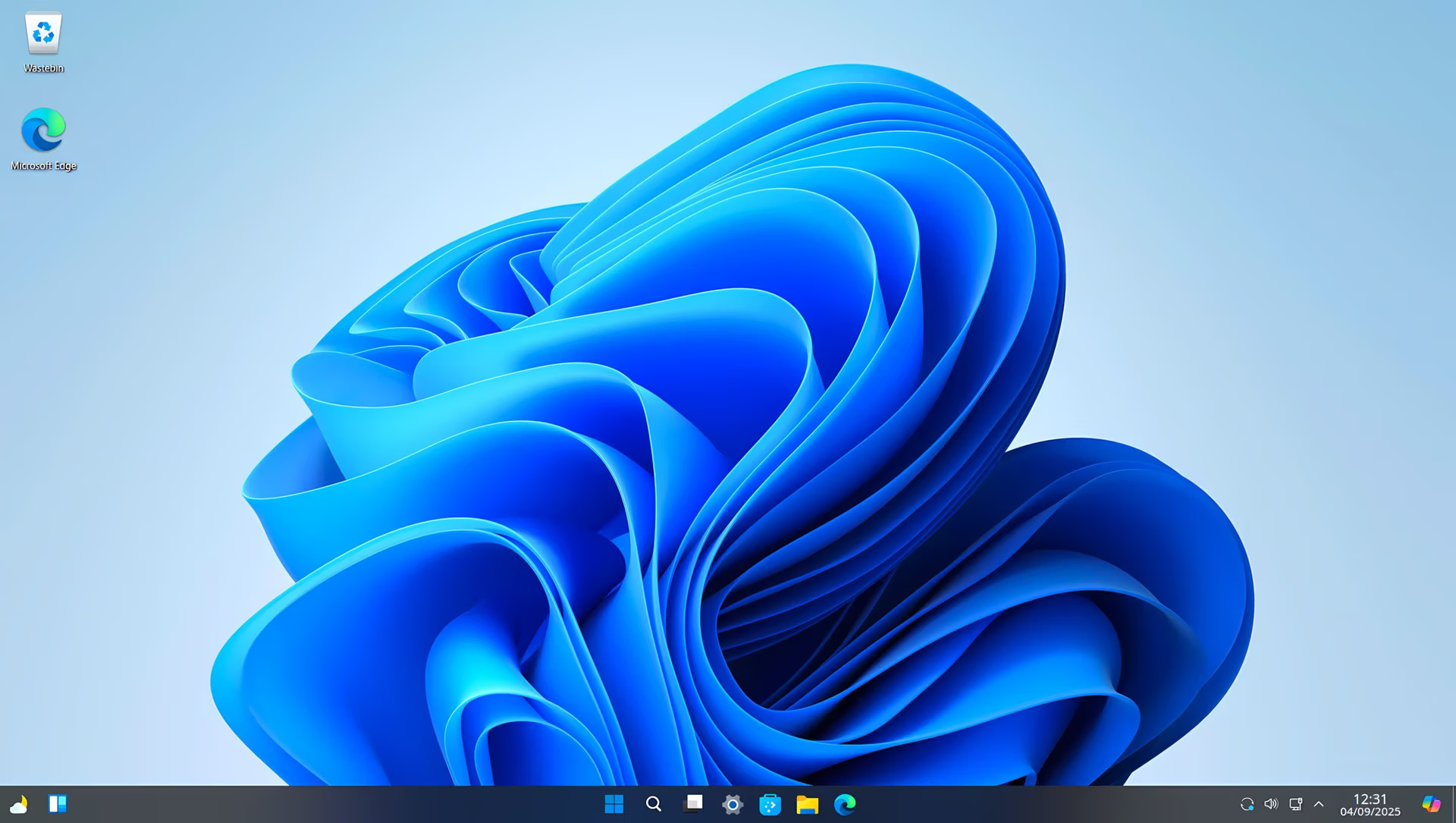
Enter WINUX, an intriguing and remarkably successful project that’s turning heads by promising a full-fidelity Windows 11 experience, but built entirely on a powerful Linux foundation. And surprisingly, initial reports and user testimonials confirm that it delivers on this audacious promise with impressive accuracy and an unwavering commitment to user experience.
More Than Just a Theme: The Genius Behind WINUX’s Seamless Windows 11 Experience
It’s crucial to understand that WINUX isn’t a revolutionary new operating system crafted from scratch; rather, it’s a meticulously crafted and highly optimized distribution based on Kubuntu, which itself is a popular derivative of the widely used Ubuntu. The true genius behind WINUX lies in its masterful leverage of the incredible customizability, power, and flexibility of the KDE Plasma desktop environment. Think of it less as a crude imitator and more as a master illusionist, carefully designing every visual and interactive element to mirror its Windows counterpart with stunning precision.
Developers behind WINUX have painstakingly configured KDE Plasma with a suite of bespoke themes, precise layouts, and intricate tweaks that mimic Windows 11 down to the smallest, most recognizable detail. This isn’t merely a superficial coat of paint; it’s a deep dive into replicating the Windows 11 aesthetic and its core functionality. Users will immediately recognize the iconic centered taskbar, the familiar Start menu layout with its pinned and recommended sections, the system tray icons that mirror their Windows counterparts, and even the subtle but impactful rounded window corners that define Windows 11’s modern look. The overall aesthetic cohesion is striking, creating an environment that feels inherently native and comfortable to any long-time Windows user.
What truly elevates WINUX beyond a simple visual theme, however, is its unwavering commitment to the holistic *experience*. It goes far beyond just looking like Windows 11; it integrates crucial elements that make the transition for existing Windows users genuinely seamless and productive. A cornerstone of this integration is the pre-configuration of powerful compatibility layers like Wine and Proton. These sophisticated tools are game-changers, allowing users to run a significant number, if not the vast majority, of their existing Windows applications and even demanding PC games without much fuss or complex setup. This directly addresses what has historically been one of the biggest and most formidable deterrents for widespread Linux adoption: application compatibility and the understandable fear of leaving beloved software behind.
The initial reports and growing community feedback are overwhelmingly positive and glowing. Users who have taken the plunge and tried WINUX describe the experience as remarkably close to, if not indistinguishable from, using a native Windows 11 installation. Yet, beneath this familiar facade lies the inherent power and advantages of a robust Linux kernel. This includes often superior performance on older or less powerful hardware, significantly enhanced security features inherent to the Linux architecture, and the unparalleled freedom and flexibility of open-source software. This powerful combination truly offers a compelling proposition for a diverse range of users seeking efficiency, security, and familiarity.
Why This Matters: Shifting Paradigms and the Future of Operating System Experience
The burgeoning success of WINUX, even in its relatively nascent form, is far more than just a passing novelty or a clever technical trick. It signals several crucial and potentially transformative shifts in how we perceive, interact with, and ultimately choose our operating systems. This project highlights a growing emphasis on user experience over underlying infrastructure, and it could fundamentally reshape the landscape of personal computing by bridging previously distinct worlds.
Lowering the Barrier to Mainstream Linux Adoption
For decades, the “differentness” of Linux has paradoxically been both its greatest strength for tech enthusiasts and its biggest hurdle for mainstream users. The command line, the unfamiliar file structures, and the distinct user interfaces have historically created a steep learning curve that many casual users were unwilling or unable to navigate. WINUX offers an unprecedentedly comfortable and familiar on-ramp to the Linux ecosystem. It allows users to almost instantaneously enjoy the myriad benefits of Linux – including superior performance on a wider range of hardware, rock-solid stability, enhanced security against malware and privacy concerns, and the significant cost savings associated with free and open-source software – without having to unlearn years of ingrained muscle memory or navigate a completely alien graphical environment. This innovative approach has the potential to dramatically expand the Linux user base, attracting millions who might otherwise never consider it, even if their initial draw is purely for the familiar Windows aesthetic.
The Unprecedented Power and Flexibility of Desktop Environments
WINUX stands as a powerful testament to the incredible flexibility, maturity, and customizability of modern desktop environments, particularly robust options like KDE Plasma. It provides compelling evidence that the fundamental “user experience” of an operating system is increasingly decoupled from its underlying kernel. The shell, the desktop environment, the graphical interface – these are the layers that users directly interact with on a daily basis. Projects like WINUX brilliantly highlight just how powerful, adaptable, and configurable these user-facing layers have become. We are likely to see an acceleration of “thematic” or highly customized OS experiences emerge, meticulously catering to specific user preferences or even brand identities, regardless of the core operating system or kernel running beneath. This signifies a profound move towards a more personalized, less rigid, and user-centric computing future where interface design takes precedence.
Experience Over Kernel: The User-Centric Evolution
This remarkable project profoundly reinforces the idea that for the vast majority of computer users, the *experience* is absolutely paramount. They care less about the intricate details of what’s under the hood – whether it’s a monolithic kernel or a microkernel, or specific filesystem architectures – and significantly more about how easily, intuitively, and efficiently they can accomplish their daily tasks. If a Linux-based system can provide a familiar, high-quality, and performant user experience that seamlessly mirrors what they’re accustomed to, then its inherent advantages become far more appealing and accessible. It’s about empowering user choice by offering a robust alternative without forcing a radical, often disruptive, change in their established workflow or requiring extensive retraining. This user-centric philosophy is a powerful driver for future OS development, prioritizing practical usability above all else.
A Significant Boost for Older Hardware and Digital Inclusion
Linux has long been renowned for its ability to breathe new life into older, seemingly obsolete machines. Its efficient resource management and often lighter system requirements mean that hardware that struggles with the demands of modern Windows versions can run Linux distributions smoothly and effectively. By combining this inherent efficiency and performance advantage with a familiar Windows 11-like interface, WINUX offers a particularly compelling and accessible upgrade path for users with aging hardware. Instead of being forced into expensive hardware upgrades or being stuck with an unsupported operating system, users can now enjoy a modern, secure, and familiar computing experience without breaking the bank. This aspect alone could contribute significantly to digital inclusion, making contemporary computing accessible to a broader demographic and extending the lifespan of valuable electronic devices, reducing e-waste.
WINUX isn’t likely to “kill” Windows, nor is that its stated intention. Instead, it represents a profound and significant step towards democratizing access to the powerful and flexible Linux ecosystem, making it approachable, understandable, and desirable for millions who might never have considered it before. It’s a clever, surprising, and profoundly insightful glimpse into a future where the traditional, rigid lines between operating systems continue to blur, and where user experience, choice, and adaptability ultimately reign supreme. This innovation challenges us to rethink what an operating system can be and how it can serve its diverse user base more effectively by offering the best of both worlds.
Read the original story and more about the WINUX project at Windows Central.
What are your thoughts on projects like WINUX? Do you believe a familiar interface is the key to wider Linux adoption, or is a unique Linux identity more important for the ecosystem’s long-term growth? Share your opinions in the comments below!