The Slow Squeeze: Microsoft’s Clever (and Inevitable) Xbox Price Hike is Here
Remember when Sony raised the price of the PlayStation 5 last year, and Microsoft stood firm, a bastion of stability in a sea of inflation? Phil Spencer and the Xbox team drew a line in the sand, declaring they wouldn’t be raising the price of the Xbox Series X or S. For a time, it was a powerful marketing win—a clear signal that Xbox was the value-conscious choice, championing consumer affordability amidst global economic pressures.
Well, that line in the sand is officially being washed away by the tide. But it’s not happening with a sudden, crashing wave; it’s a slow, methodical creep, a calculated adjustment that speaks volumes about Microsoft’s evolving strategy in the highly competitive console market.
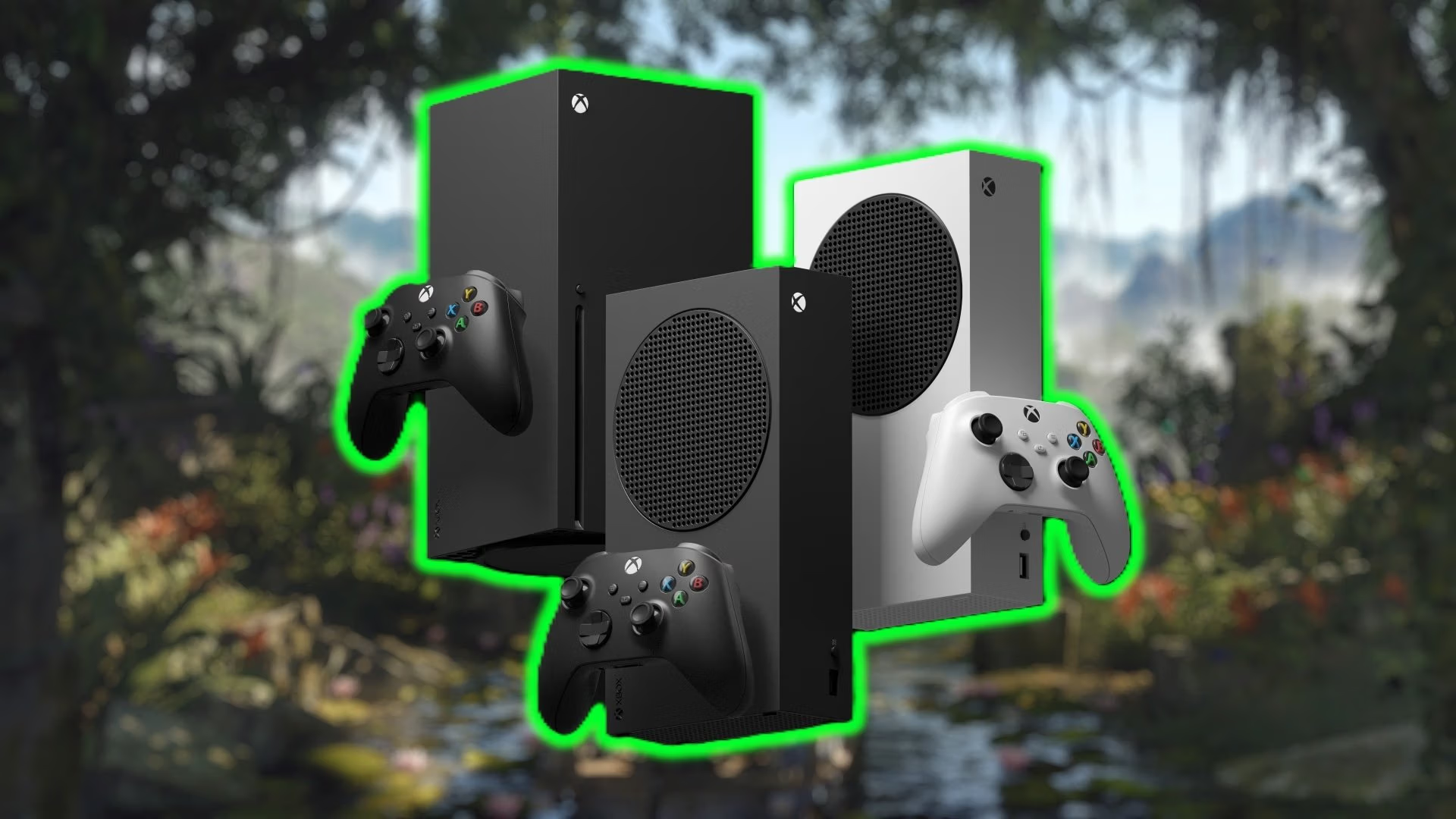
Recent reports confirm that Microsoft is quietly increasing the prices of key Xbox SKUs in the United States. No, you won’t see the standard $499.99 Series X or the $299.99 Series S suddenly jump in price on the shelf. The strategy is far more subtle and, frankly, much smarter from a long-term business perspective.
The price adjustments are hitting new and bundled products, allowing Microsoft to test the waters and acclimate consumers to higher price points without the immediate shock of a universal price hike. The recently-announced 1TB Carbon Black Series S, a new SKU offering increased storage, is seeing its suggested retail price climb from $349.99 to $379.99. Similarly, the popular Xbox Series X bundle with Diablo IV, a high-demand title, is getting a bump from $559.99 to $589.99. These aren’t isolated incidents or errors; they represent a deliberate, well-orchestrated strategic shift in Xbox console pricing.
Takeaway 1: The “Boiling the Frog” Approach to Xbox Price Hikes
Instead of a shocking, headline-grabbing announcement that the base consoles are now more expensive—a move that typically generates significant consumer backlash and negative media attention—Microsoft is normalizing higher prices through new SKUs and high-value bundles. This is a classic “soft” price increase, meticulously designed to acclimate consumers to a new normal without the immediate sticker shock that often accompanies direct price adjustments on established products.
This strategy is often referred to as “boiling the frog,” where changes are introduced so gradually that those affected don’t perceive the full impact until it’s too late to react. By introducing a “premium” version of the Series S with expanded storage and adjusting the price of an appealing bundle, Microsoft is effectively testing the market’s tolerance for higher price points for Xbox hardware. They are establishing new psychological anchors for what consumers perceive as an acceptable price for enhanced or bundled Xbox offerings. This circumvents the direct comparison to previous prices for the exact same product, making the increase feel less like a penalty and more like a standard market adjustment for new or differentiated goods.
The choice of which products to adjust is also highly strategic for Microsoft’s Xbox pricing. The 1TB Carbon Black Series S is a new SKU; therefore, its initial price point has less direct historical comparison than the original 500GB Series S. Consumers might perceive the increased cost as justified by the larger storage capacity, rather than purely as an Xbox price hike. Similarly, a game bundle, especially with a highly anticipated title like Diablo IV, offers an immediate perceived value that can mask the incremental price increase. Buyers are often more focused on the overall deal and the inclusion of the game, rather than scrutinizing the console’s individual price within the bundle.
This subtle approach minimizes negative press and consumer outcry, allowing Microsoft to slowly but surely raise the average selling price (ASP) of their Xbox hardware over time. It’s a masterclass in psychological pricing, leveraging cognitive biases to make significant financial adjustments feel less impactful to the end consumer. By slowly shifting expectations for the Xbox Series X price and Xbox Series S price, Microsoft paves the way for future price adjustments, making them seem less extraordinary when they inevitably occur.
Takeaway 2: The End of the Console Loss-Leader Era for Microsoft
For decades, the console business model was deceptively simple yet fundamentally challenging: sell the hardware at a loss or break-even, and then make your money back—and significant profit—on game sales, accessories, and later, online services. This “loss-leader” philosophy allowed console manufacturers to rapidly expand their installed base, creating a large audience for their profitable software ecosystem.
However, that philosophy is rapidly becoming obsolete, especially for a company with the vast resources and diversified interests of Microsoft. The economic realities of manufacturing, global inflation, increasing component costs, and the sheer expense of developing AAA games (now often exceeding $200 million per title) have made the traditional loss-leader model unsustainable or at least far less appealing. The days when Xbox hardware could afford to be a simple gateway, barely pulling its own weight, are drawing to a close. This Xbox pricing strategy reflects a significant industry shift.
This move, when viewed alongside the recent price increases for Xbox Game Pass subscriptions and the industry-wide shift to $70 first-party games, paints a complete and cohesive picture. Microsoft is now actively adjusting the price of every single pillar of its Xbox ecosystem: hardware, recurring subscriptions, and individual software titles. They’ve spent years meticulously building a massive, “sticky” ecosystem with Game Pass at its core, successfully locking in a significant user base with its compelling value proposition.
Now that the user base is substantial and deeply engaged within the Xbox platform, the company is recalibrating its pricing strategy to make every single part of that ecosystem more profitable. The initial investment in Game Pass as a growth driver is transitioning into a profit optimization phase. The Xbox Series X and Series S hardware, instead of being merely an entry point, is now expected to contribute more substantially to the company’s bottom line. This reflects a maturation of the Xbox business, moving beyond pure market share acquisition to focus on sustainable, long-term profitability across all revenue streams.
The shift away from the pure loss-leader model is also a reflection of Microsoft’s broader business strategy, which prioritizes recurring revenue and ecosystem value. In a world where cloud services and subscriptions are king, expecting significant initial hardware losses for a one-time purchase becomes less attractive. By making Xbox hardware more profitable, they reduce the financial strain, allowing more investment into Game Pass content, cloud gaming infrastructure, and future hardware innovation. This isn’t just about covering costs; it’s about optimizing the entire value chain of the Xbox experience, impacting the overall cost of gaming.
What This Means for the Future of Xbox Console Pricing
This “stealth hike” is far more than just a reactive measure to current economic pressures; it’s a profound strategic signal about what’s to come for the Xbox brand. It sets a significant new precedent, reshaping consumer expectations and laying the groundwork for future product launches. As we look toward a potential mid-generation console refresh—perhaps an Xbox Series X Pro or a Series S refresh with more powerful components—or indeed, the highly anticipated next generation of gaming hardware, this quiet adjustment carries immense weight for future Xbox console pricing.
The psychological anchor of a $499 premium console, a price point that has largely held firm for the flagship model since its launch, has effectively been lifted. By gradually introducing higher-priced SKUs and bundles, Microsoft is subtly conditioning consumers to accept that future, more powerful Xbox hardware will almost certainly debut at a higher price point than previous generations. They’re getting us used to the idea right now, making the eventual announcement of a $599 or even $699 next-gen console less shocking when it finally arrives, impacting the perceived value of future Xbox Series X consoles.
Furthermore, this move signals a definitive end to the era where Microsoft actively held the line on price as a direct competitive cudgel against Sony. For a time, maintaining a lower or stable price point was a key differentiator for Xbox, particularly when PlayStation raised its prices. That particular battleground appears to have been abandoned, or at least re-prioritized. The new strategy is clear: the primary value proposition of Xbox is now firmly rooted in its expansive ecosystem, driven by Game Pass, cloud gaming, and its growing library of first-party titles, rather than solely on hardware affordability.
This shift means that consumers are being asked to pay more across the board for the privilege of entry into and continued participation within the Xbox ecosystem. It’s not a sudden, painful jolt, but rather a slow, deliberate squeeze—a gradual tightening of the financial commitment required to fully embrace the Xbox experience. From the initial purchase of the console to the ongoing subscription fees and individual game purchases, the entire package is being optimized for increased revenue generation. This Xbox pricing strategy is designed for long-term sustainability and profitability, ensuring that Xbox can continue to invest heavily in content and technology, even if it means asking more from its dedicated player base.
For gamers, this means a re-evaluation of what “value” truly means in the console space. Is it the upfront cost of the box, or the cumulative cost of the services and games over time? Microsoft’s bet is that the strength and breadth of its ecosystem, particularly Game Pass, will continue to justify these creeping price increases and maintain consumer loyalty. It’s a calculated risk, but one backed by years of investment in building a robust, interconnected gaming platform.
Read the original story at TrueAchievements.
What are your thoughts on Microsoft’s “slow squeeze” approach to Xbox pricing? Do you believe the value of the Xbox ecosystem still justifies these gradual increases, or do you think it will eventually deter new players?